
Castlemains
By 1848 Cartside House had 35 acres of grounds, including the Castle policies, stables, gardens, shrubberies and walls, and the fields called the Sunk Fence Park, Ladyfauld Park, High Little Park and Dovecot Park.
 In the 1840s the Earl of Cathcart, then in his eighties, lived in Cartside House (which he preferred to call Cathcart House), along with his wife, grown children and ten servants. The Castle was in decline by then and by the 1870s was described as a ‘square roofless keep on an eminence surrounded by well grown timber’. After the earl’s death Cartside was occupied by a string of merchants and industrialists, the longest occupant, continuing the Caribbean connection, being William Watson Stuart, a ‘West Indies and African merchant’, through the 1880s. The two cottages in front of the castle were still occupied into the 20th century by gardeners, grooms and coachmen along with their families.
Hagtonhill Farm was at its peak in the 1840s when it was worked by David Glen and his family, and six farming servants. In the 1860s it was still a mixed dairy and pastoral farm employing two ploughmen and two dairymaids, but within a decade it was used mainly for sheep grazing. By 1881 the steading was used as two cottages let out to local shepherds and labourers.
Linn became the focal point of the old Hagtonhill estate. Though Linn House is often claimed to have been built in 1828, it was advertised from 1791. The following year, when Linn and Bogton came under the same ownership, Linn estate began. In the autumn of 1801 adverts appeared for:
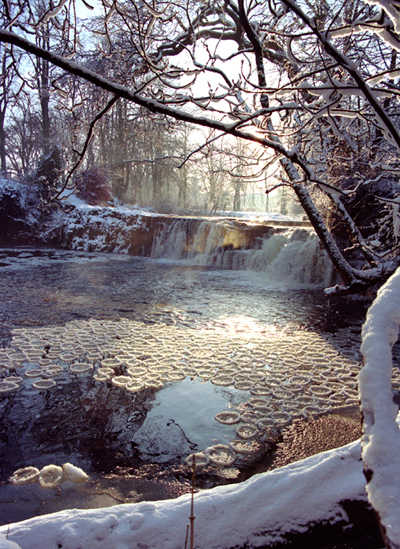 ‘Delightful villa ground upon the banks of the Cart among woods, rocks and waterfalls, an hour’s walk from town along a good pathway, and conveyance for one shilling by the Ayr Mail Coach twice a day, with delightful situations for villas, each containing 6-8 acres of good well cultivated land, commanding a romantic view of the waterfalls, Cathcart Castle, Glasgow and the adjoining country.
The back grounds of Hagtonhill, are improved, belted and subdivided and are reserved for the purchasers, who may want a few acres more. Upon
Gentlemen have the best opportunity just now of viewing the soil and situation while the crop is in the ground and foilage upon the trees. At the Lin-fall upon the Bogton side there is one of the very best sites for a Mill: the Ark and Bywash are already cut; the Lin-Rock saves the expense of a Dam and Lead; a Sluice in the Bywash is only requisite to tumble the Cart over the Lin, the materials are on hand for extensive buildings. the land there is Lime, Coal, Freestone, Bonnetstone and Pavement in abundance for buildings of any extent.
For the small sum of £30 each the purchasers can have a convenient bridge over the Cart within 200 yards of the new public road.
This was accompanied by a notice that Gentlemen were forbidden to shoot game upon the lands of Hagtonhill or Bogton.
By this time the old estate of Hagtonhill had been divided into two equal sized farms of Hagtonhill and Linn, each with about 80 acres of arable land. Linn was let out, along with another part called Thornyfauld, to the Peddie and Barr families. In 1811 Linn was described as a ‘genteel house with a view of the River Cart’ and two years later as a country residence, which included a garden. In 1817 Linn House contained ‘six rooms, kitchen and closets’. The development of the estate really took off once the mineral resources were exhausted and deliberately concealed by tree planting. From 1817 the Campbells took over and began building up the core of what is now Linn Park, from bits of Bogton and Linn.
The ‘Sugar’ Campbells
One of the few well known ‘facts’ about Linn Park is that it was developed by the ‘Sugar’ Campbells, Mungo and Colin, sons of Alex Campbell of Hallyards. Like the McDowalls, as well as trading from Glasgow, the Campbells owned sugar plantations in the Caribbean. The peak of the Campbell’s development of Linn coincided with the abolition of slavery on British plantations in 1833. This provided a huge windfall, when the family were awarded more than £50,000, a vast sum at the time, and were among the top ten sugar planters in the UK. The money was given as compensation for the loss of ownership of more than 1,200 enslaved African men, women and children on six plantations (the Africans received nothing and most continued working for the Campbells for a nominal wage).
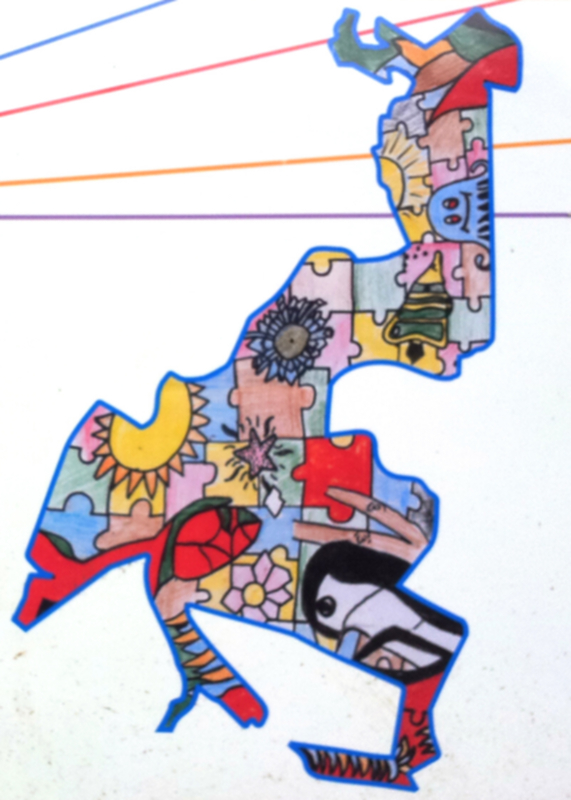 The deeper irony is that Glasgow City Council has ‘twinned’ its various parks with countries or regions which are competing in the 2014 Commonwealth Games. By chance, Linn Park has been twinned with the Caribbean. Visitors to Glasgow in 2014 may be interested to know that Linn Park’s owners had plantations on many Caribbean islands, including Trinidad, Grenada, St Vincent, St Lucia, St Kitts, Nevis and in British Guyana. Thus the Linn Park we see today has worldwide links which have still to be appreciated.
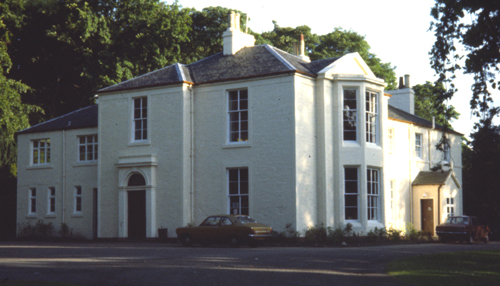 The Campbells initially preferred to reside in Bogton House at Muirend. In the early 1830s they made their biggest contribution to Linn, building the bridge (see below) and let out ‘Linn House and pleasure grounds’, described as being ‘laid out with extensive walks, garden and offices’. The Campbells were related to the Gordons of Aikenhead (also Caribbean merchants) who by the 1850s had bought Linn back. It was not always possible to find a tenant for Linn House, and the residents often included some of the estate’s farm servants (in the 1840s), a coachman and his family (in the 1850s), and the gardener (in the 1870s). To make Linn House more attractive to rent, the relatively plain house was extended by architect Charles Wilson in the early 1850s.
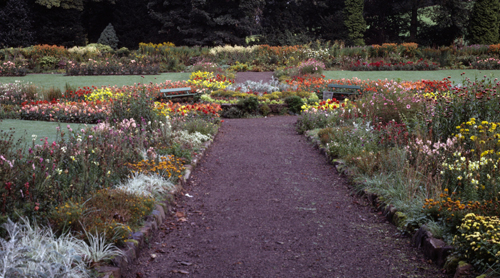 In between, Linn House was let out to mercantile families with their servants. The stables courtyard, originally the steading of Linn Farm after it moved from the falls at the waulk mill, was also used as accommodation for farming tenants or the coachman. A gardeners cottage was built on the edge of Linn garden. The lodge at the Netherlee gates was occupied by gardeners or estate ploughmen. Apart from farming, the main asset of Linn was the management of its woodland. Early in the 19th century the waulkmill on the Goldenlee side of the falls was converted to a sawmill.
By far the longest resident of Linn estate was David Allan, the estate forester, who occupied the sawmill cottage. David arrived at Linn in the 1830s and still lived in the mill cottage in 1901, aged 78. Though retired by then, David’s wife was still alive. They shared the cottage with their two nieces, Marion and Lizzie, a dressmaker and a nurse. David’s son Alex was the gamekeeper for Linn estate. The cottage lay on the old overgrown path from the sawmill up to the cemetery and had its own little garden. Until recently the cottage foundations and scattered bricks could still be seen.
To find out more on the Sugar Campbells click here. Sadly the gardens are no longer, but a carved Palm Tree sist in the middle - to see more click here.
Previous section: 18th Century Improvements
Next section: Crossing the White Cart