
A ✓ indicates that the species has also been indentified by sound using Merlin.
Introduction
The following is taken from the section titled "On the River" [fourth page] in an undated leaflet entitled "Birds of Linn Park" which we think was published in the mid 1990's.
The most spectacular bird in Linn Park is the bright blue Kingfisher. The clean waters of the White Cart provide this once rare bird with a good supply of small fish and insects. Sightings of the Kingfisher are generally very brief because it flies low and fast along the river. But it seldom flies for any distance aind can often be re-located by its high-pitched call.
Another fish-eater is the Heron which stands motionless by the river's edge waiting for its prey to come within striking distance. Its two metre wing-span makes it by far the biggest bird to visit the park.
Most often seen perched on rocks by the river, the Grey Wagtail picks off the insects which cling there. Its grey back, yellow underparts, and its habit of continuously moving its long tail give this bird its name.
The Dipper is the only bird in Britain that can walk underwater. It can often be seen sitting on rocks, its white breast and black body bobbing up and down as it prepares to plunge into the water, turning over stones for the insects and larvae that live there.
The most common duck on the river is the Mallard. With its dark green head and chestnut breast the male is unmistakable. The female's brown colouring provides it with camouflage when sitting on the nest.
We comment that the Goosander, which the leaflet indicates is a "Winter Bird" now seems to be Resident. To be added to the list of "Occasional Visitors" is the Cormorant, and the Goldeneye Duck.
Cormorant
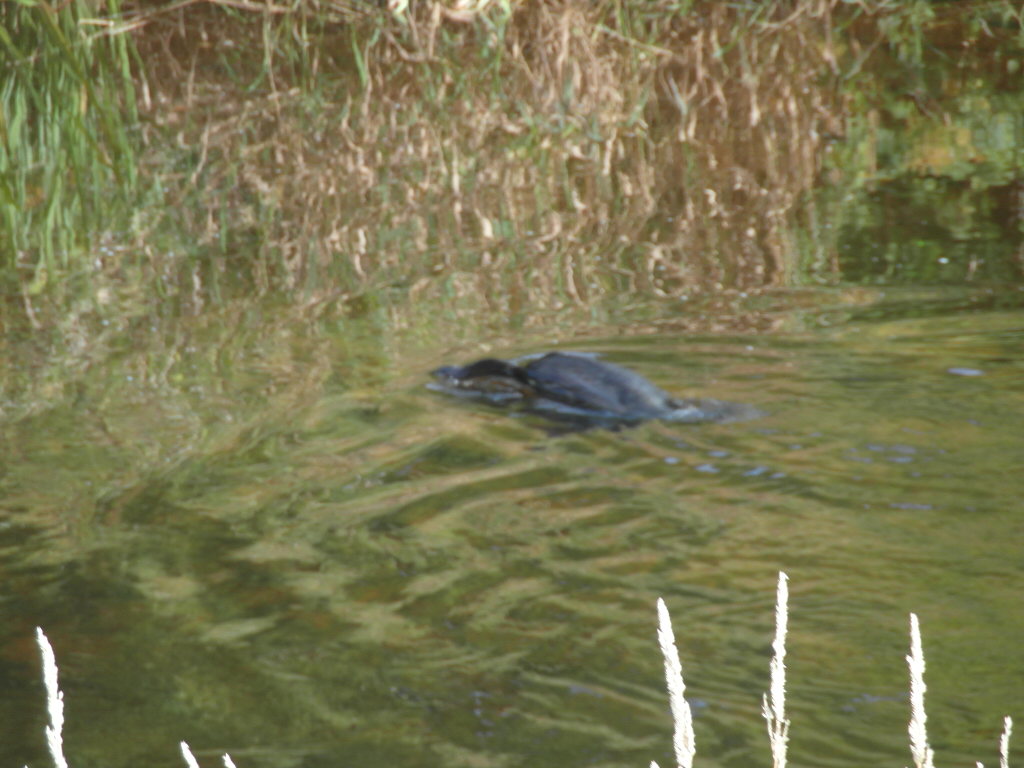
27th August 2014 - here's a picture of one having an early supper - head down and looking ... an amazing sight.

Of course a much better photo is from Chris. This one is drying out after a swim ... the feathers are NOT waterproof.
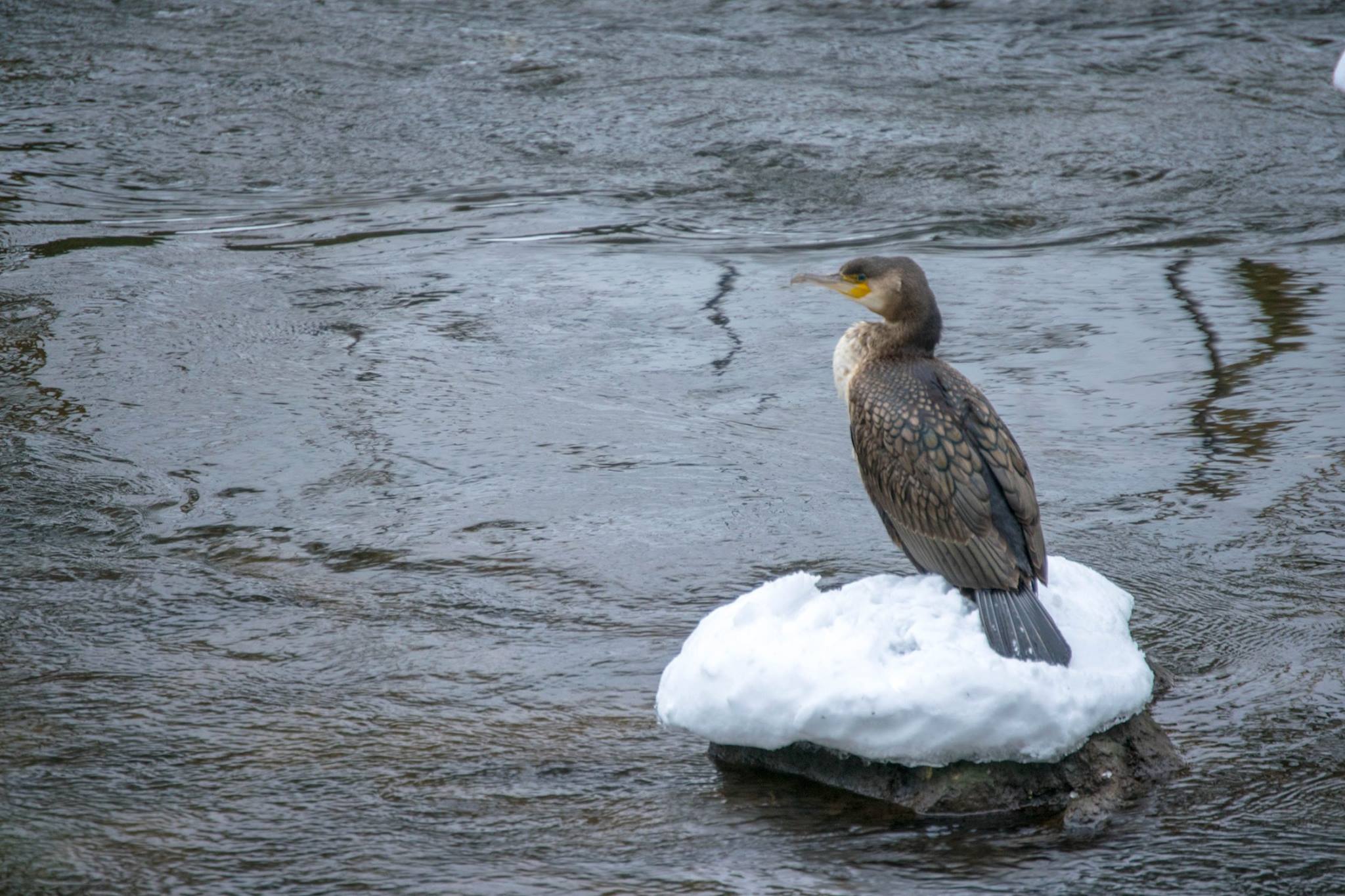
The latest photo is from Gerry Que on 4th March 2018 above the weir at Netherlee.
Dippers - Resident
Dippers are a not uncommon sight: often seen below the waterfall, beneath the castle, and both sides of the Snuffmill Bridge.
Thanks for these to Chris Everett.


From Aileen Milne, 29th Decmember 2017


Blue Headed Wagtail
Photographed we believe for the first time, by Ailen Milne on 13yh October 2020. Fabulous photos and video.
Compare then to the Grey Wagtail.


Grey Wagtail ✓ Resident
To see a Grey Wagtail hovering and hoovering up the flies and other flying bugs is simply amazing.
Thanks to Chris Everett who took these amazing photos on 26th April 2007.


Click to find out more about the Grey Wagtail on eBird - recorded on 9th July 2025
Herons - Resident
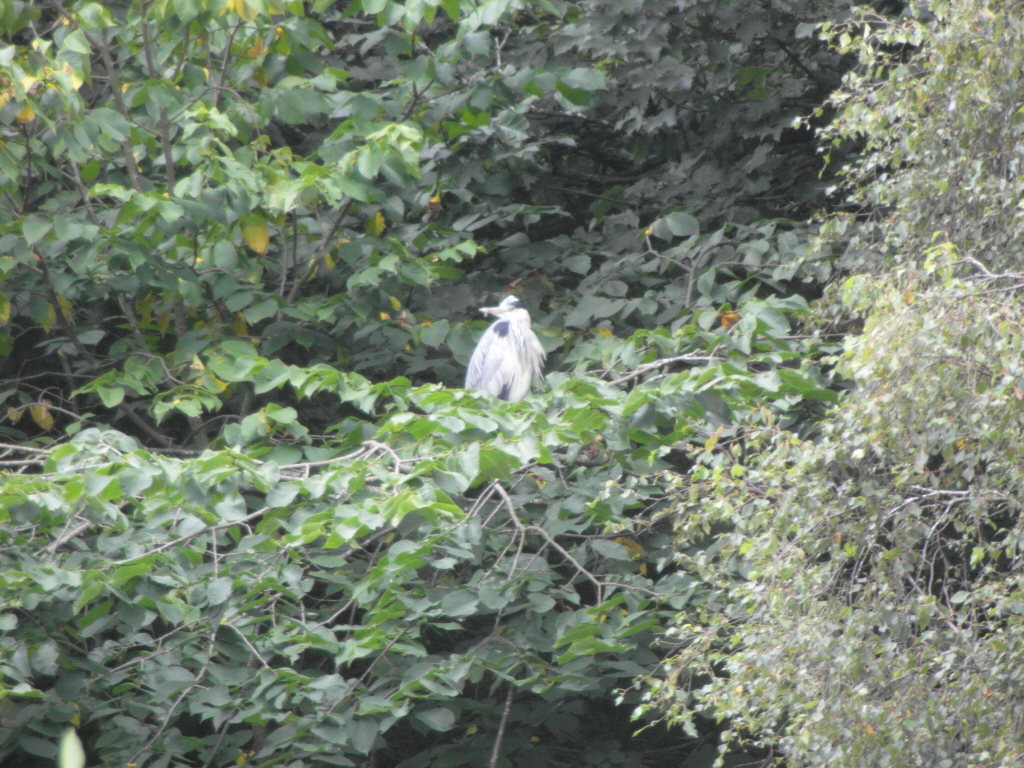
Herons are difficult to photograph .. here is an attempt by one of the Gentlemens Walking Club on Wednesday 3rd September 2014: In flight, and sitting on a tree.
And of course a few really good ones from Chris Everett.


Wandering through the Park down to the Smiddy on a warm Friday evening and met Dieudonne ... and he asked me what sort of bird he had photographed. Fabulous pictures of a Heron below the Castle taken on 25th May 2018.


Some fabulous pictures of a Heron were taken by Aileen Milne on 15th May 2018.


And last, on 8th May 2020, 75th anniversary of VE Day, four fantastic pictures by Bernie Wallace.


Kingfisher ✓ Resident
To see a Kingfisher in flight is fantastic. Both the White Bridge and the Snuff Mill bridge make good vantage points.

 Thanks to Chris Everett for the photo to the left and the gallery below, and to Mhairi for the one to the right.
The speed at which they fly makes them difficult to see in flight: but one way is to watch a pool and suddenly see the ripples as one dives in and comes out with a small fish.


The kingfishers are still here, and in late Summer 2019, Aileen Milne got these lovely photos and two videos.


Click to find out more about the Common Kingfisher on eBird - recorded on 10th July 2025 - Note that there about 18 types of Kingfisher !
Goldeneye Ducks
A rare sight ... caught by Chris Everett


In March 2018, Aileen Milne took these lovely photographs.


Goosanders - Resident [1990 list shows as Winter Visitor]
Photos by Chris Everett.


Mallards ✓ Resident
Some lovely photos by Chris Everett.


And some various photos by the Gentlemen walkers taken at then of May 2014.


Click to find out more about the Mallard on eBird - recorded on 21st July 2025