
Indentifiying Butterflies
Butterflies
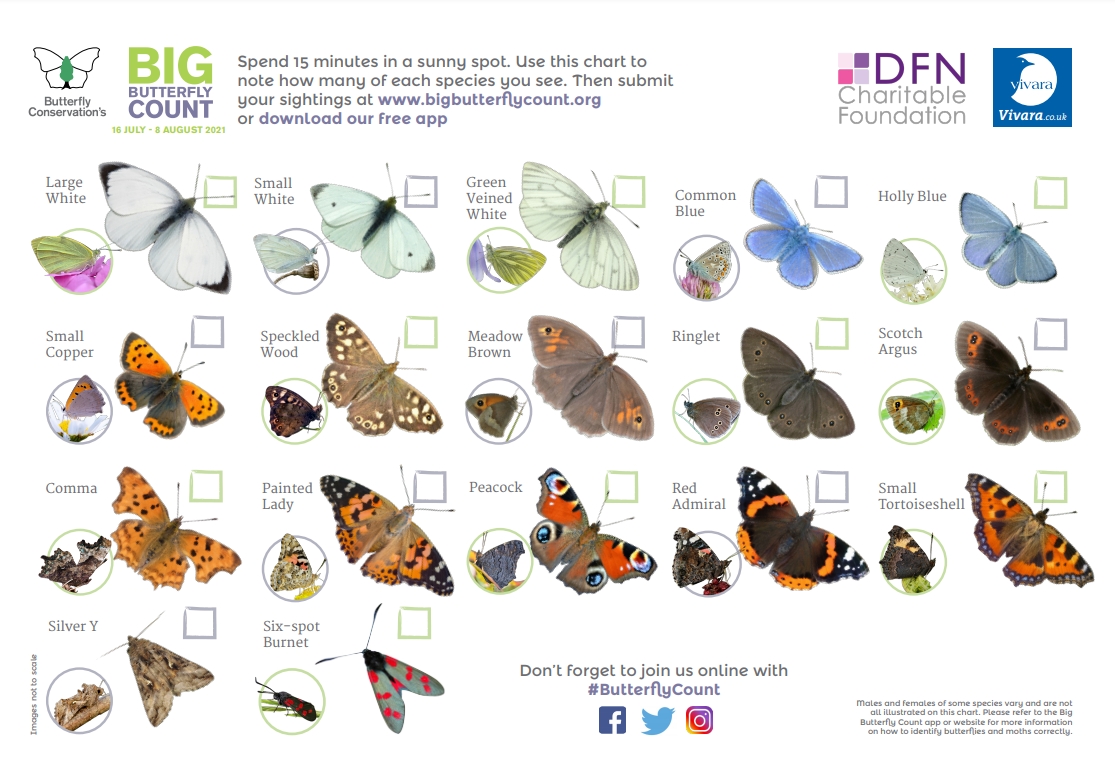 Most of the photographs are of Butterflies. Butterflies are insects in the macrolepidopteran clade Rhopalocera from the order Lepidoptera, which also includes moths. Adult butterflies have large, often brightly coloured wings, and conspicuous, fluttering flight.
Please support https://butterfly-conservation.org/ which was supported by https://www.dfnfoundation.org/conservation - scroll down for Butterfly's.
Note: The Author lived in Kenya and had Panglins in the garden in 1974.
If you have some photographs of anything - please let us have them: post on the facebook page, or email gents@linnpark.org.uk.
A great web site for identifying common ones: https://www.wildlifetrusts.org/wildlife/identify-british-butterflies
Indentifiying Bumblebees
Bumblebees
The following has been taken from the British Trust for Ornthology's recent leaflet. Click here to view [and then print] the pdf. Meanwhile here is the content:
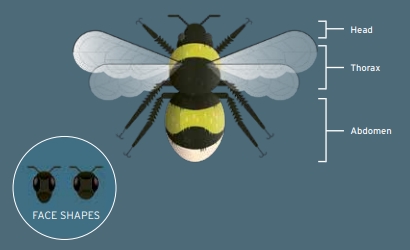
Bumblebees are among our most charismatic insects and many gardeners are keen to encourage them into their gardens — but they can be difficult to identify.
This is compounded by the different castes (queens, workers and males), age, and natural variability. Of the 24 species found in the UK, only a small handful are found regularly in gardens. By focusing on these more common species, we can begin to learn how to identify these fascinating animals.
When spotting a bumblebee in your garden, the first thing to do is note the tail colour, which narrows down the species it could be. It is also worth looking at the shape of the face, and other colours on the bee. You could take photographs from a few different angles to help; this will allow you to continue identifying it later.
If you have bumblebees in your garden that you can’t identify as a particular species, you can still add them to your Garden BirdWatch counts.
You can select different types of unidentified bee, including black with red tail, brown, black and yellow with white tail, or black and yellow with red tail, instead of a full species. Simply record the highest count of each type you see at any time like you would with any other GBW species. If you have photos, send them to us and we can help you identify your garden bumblebees.
Common Carder Bee
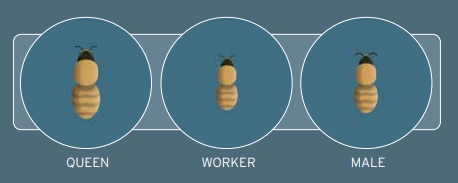 Common Carder is the carder bee most likely to be encountered in your garden. These bumblebees are ginger all over, with paler white-grey colouring on the side of the thorax.
Be aware of faded individuals in late summer, which can appear very grey, but their small stature should help narrow them down to this species.
Red-Tailed Bumblebee
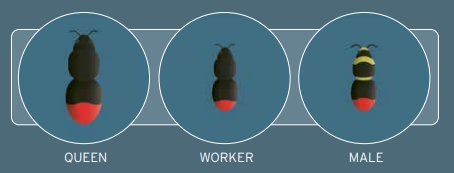 Queens are very distinctive. They are quite large and are the only common garden species to be entirely black with a red tail. Workers are smaller but share the same colour pattern.
Males are similar to male Early Bumblebees but can be distinguished by their more extensive brighter red tail, and longer body shape.
Early Bumblebee
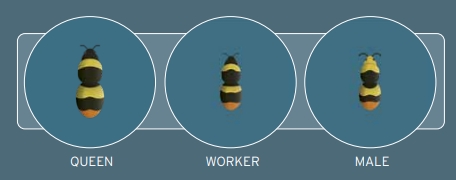 Early Bumblebees are small and, as the name suggests, establish colonies early in the year. Males are similar to male Red-tailed Bumblebees, but are generally smaller, with more yellow on the head and abdomen, and have just a small orange tip to the tail.
White-Tailed Bumblebee
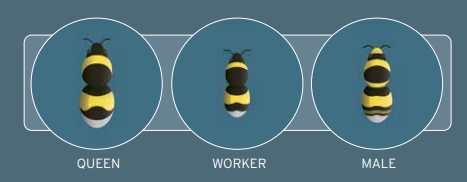 Queens and workers have two bright lemon yellow stripes and a pure white tail, while the males have much more yellow, including yellow on their heads. The lemon yellow stripes combined with clean white tails help to separate them from Buff-tailed Bumblebees, which have more golden or orange tones in their yellow stripes.
Buff-Tailed Bumblebee
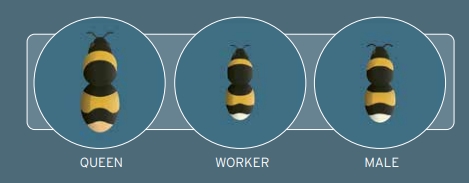 One of our largest species. All castes are similar in markings to the Whitetailed but the stripes are more golden in colour. Queens have warmer tones on the tail, but the workers can be very similar with white tails. Looking closely at the face can help to identify these bees; Buff-tailed have a short wide face, whereas White-tailed Bumblebees have a longer face.
Tree Bumblebee
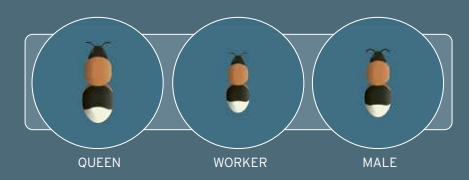 Easily identified by the ginger thorax and white tail; a unique combination among our bumblebees. The large queens are often seen in March and April. If you discover a bumblebee nest in your house or in a nest box, it will likely be this species.
Garden Bumblebee
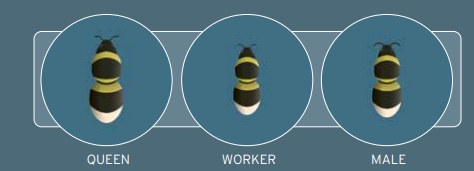 This species has the longest face and tongue of the commoner UK species. Garden Bumblebees can often be found visiting deep flowers including Foxgloves. All castes have a yellow midriff, with yellow hairs on both the thorax and abdomen.
Cuckoo Bumblebees
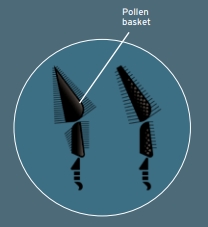 Whereas most bumblebee species are social, with workers helping the queen to produce new offspring, some species have a different strategy — parasitising social bumblebee colonies. These species, known as ‘cuckoos’, lay their eggs in the nest of others (like cuckoo birds), shifting parental duties to the nest host. Queens and workers of social bumblebees collect protein-rich pollen to help young bees develop, but as cuckoo bumblebees don’t need to do this, they lack pollen baskets on the hind legs. Pollen baskets are smooth, concave areas bordered by long stiff hairs. Though their colour markings usually resemble that of their host species, you may be able to identify a cuckoo bumblebee by their darker wings, sparser body hairs and shorter hairs on the hind legs.
Hornet, Wasp, Bees Comparison
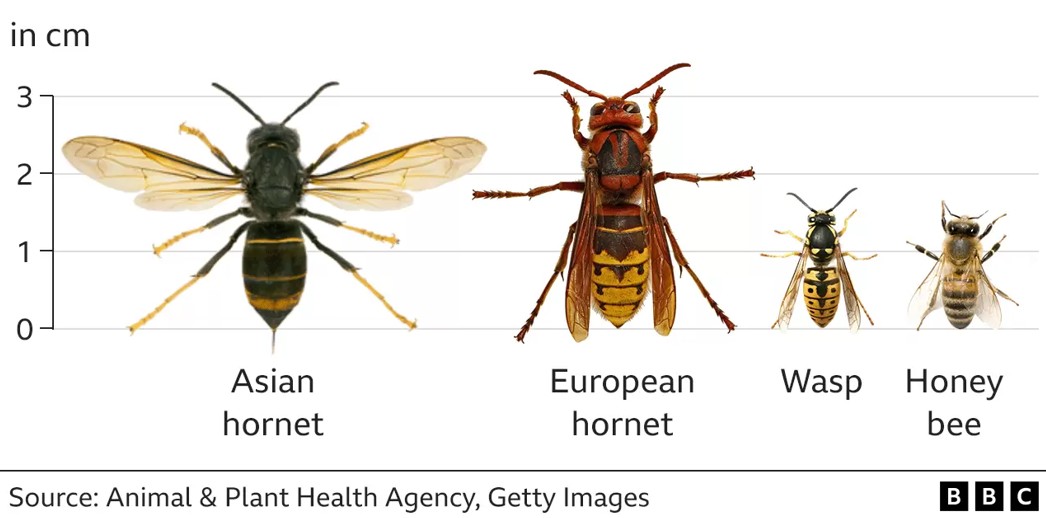 Thanks to the BBC News.
Uk Spider Identification
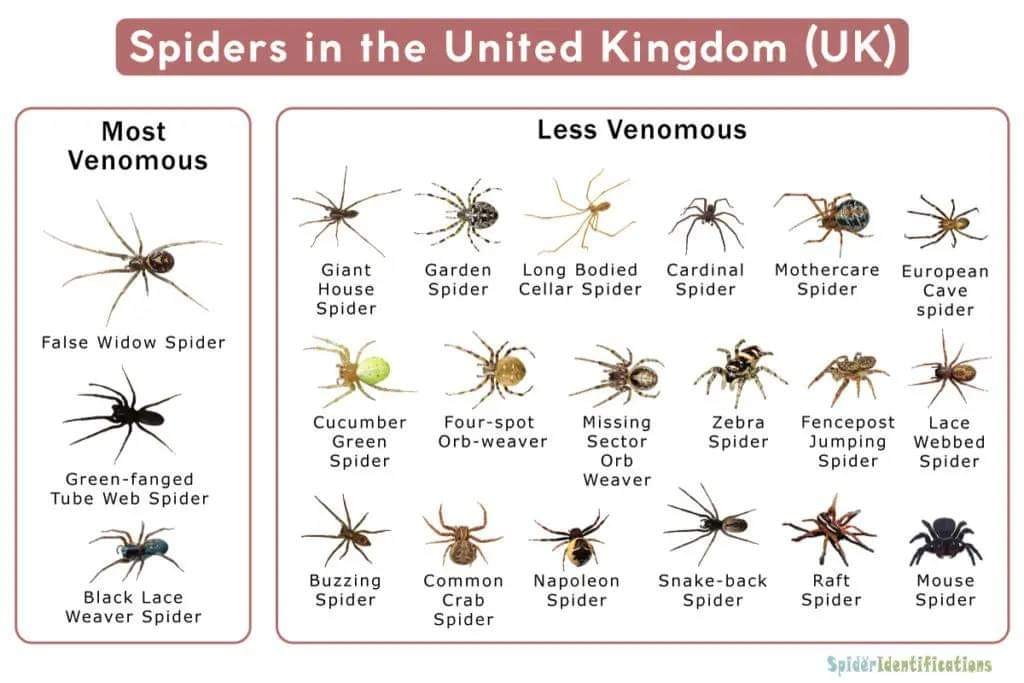 Thanks to Isobel Sinclair for showing us this !
Antler Moth
Thanks to Aileen Milne for the photos and video, taken on 1st August 2020.


</p
Honey Bee
Thanks to Aileen Milne, taken on 19th June 2020.


Soldier Beetle
Thanks to Aileen Milne, taken on 1st August 2020


Bluebottle Fly
Thanks to Aileen Milne, taken on 7th August 2020

Bumblebee
Thanks to Aileen Milne, taken on 19th June 2020. These two seem to have different markings. There are some 250 varieties of Bumblebee. The second one may be a Tree Bumblebee - Try here: https://highlandwildlifephotography.co.uk/bumblebees/


Again, thanks to Aileen Milne, taken on 7th September 2020 - On a Scabious Flower.


Comma Butterfly
Thanks to Aileen Milne, taken on 22nd July 2020


Common Blue Damselfly
Thanks to Claire Torrance who took this amazing photograph on 26th June 2021.

Daddy Longlegs
An amazing sequence of photgraphs of two of these elegant bugs mating - whilst on Mo Scott's window. Fantastic. The middle one is named "cuddling". What more can one say ! There is about four hours between the first and last photographs.


Devils Coach Horse Beetle
Thanks to Claire HK Torrance for this photo takne in early September 2020, off the road alongside the Golf Course.

Dragonfly
Thanks to Aileen Milne, taken on 22nd July 2020, and 16th September 2020.


Frog
Thanks to Claire HK Torrance for these photos.


And thanks to Aileen Milne for these ones taken in early March 2021 at the pond up the Zig-Zag


Thanks to Aileen Milne for these ones taken on 23rd February 2024 . . . the mind boggles !


Grasshopper
Thanks to Aileen Milne, taken on 14th August 2022


Hawthorn Shield Bug
Thanks to Claire Torrance, taken on 25th April 26

For more information see https://en.wikipedia.org/wiki/Hawthorn_shield_bug
Hoverfly
Thanks to Aileen Milne, taken on 19th June 2020


Thanks to Claire Torrance, taken on 7th July 2024


Claire Comments: (Helophilus Pendulus) A Hoverfly🐝 commonly known as "The Footballer" due to the vertical stripes on it's thorax resembling a football top.
Lacewing
Thanks to Claire HK Torrance for this photo.

Blue Lacewing
Thanks to Aileen Milne, taken on 9th July 2020. The Lacewing is transparent, and difficult to see in the full photograph, but in the extract it can be seen clearly.


{slider=Ladybird}
Thanks to Aileen Milne, taken on 9th July 2020.


Mayfly
Thanks to Claire HK Torrance for this photo taken in May 2020 in the calm water at Netherlee.

Moth
Thanks to Aileen Milne, taken on 19th June 2020. Using the first image in Google Image Search suggests that this maybe a bombycidae, but that is unlikely as they come from Asia. Using the second image Google suggests hofmannophila pseudospretella - or the common house moth.


Meadow Brown Butterfly
Thanks to Aileen Milne, taken on 17th and 19th June 2020


Thanks to Chris Everett, taken in July 2015

Orange Tip Butterfly
Thanks to Chris Everett, taken in May 2011, and September 2014.


And this one form May 2020 taken by Claire HK Torrance

Painted Lady Butterfly
Thanks to Aileen Milne, taken on 7th September 2020


Thanks to Chris Everett, taken in May 2011

Peacock Caterpillars
Thanks to Aileen Milne, taken on 1st July 2020


Peacock Pupates
Thanks to Aileen Milne, taken on 1st August 2020


Peacock Butterfly
Thanks to Bernie Wallace taken on 23rd April 2020, and Claire Torrance taken on 18th May 2021.


Red Admiral Butterfly
Thanks to Aileen Milne, taken on 16th June 2020


Thanks to Chris Everett, taken in September 2019

Ringlet Butterfly
Thanks to Aileen Milne, taken on 17th and 19th June 2020


Thanks to Chris Everett, taken in July 2017

Shield Bug
Thanks to Aileen Milne, taken on 9th July 2020


Small Heath Butterfly
Thanks to Aileen Milne, taken on 17th June 2020


Snail
Thanks to Claire HK Torrance for these photos.Snail, and two pictures of eggs.


Thanks to Aileen Milne, taken on 7th August 2020

Spider's Webs
Thanks to Aileen Milne, taken on 2nd October 2020


White Lipped Snail
Thanks to Aileen Milne, taken on 1st July 2020

Common Toad
Thanks to Claire HK Torrance for these photos. The ones on the right are juveniles.


Tortoise Shell Butterfly
Thanks to Aileen Milne, taken on 16th September 2020


And this one from Claire HK Torrance, taken in May2020

Green Veined White Butterfly
Thanks to Aileen Milne, taken on 7th August 2020


Large White Butterfly
Thanks to Aileen Milne, taken on 7th August 2020


Small White Butterfly
Thanks to Chris Everett, taken in August 2013


Thanks to Chris Everett, taken in August 2013
